
Every Kenyan driver knows the frustration of being stuck in bumper-to-bumper Nairobi traffic with a manual gearbox — and the equally familiar feeling of wanting more control than a standard automatic offers on the open highway to Mombasa. What if you did not have to choose between the two?
That is exactly the gap that Tiptronic transmission fills. It offers the ease of an automatic for city driving, combined with the hands-on gear control of a manual when you want it. If you have ever spotted a gear lever with a "+" and "−" slot beside the main automatic gate, or noticed paddles mounted behind the steering wheel, you have likely been looking at a Tiptronic system.
This guide breaks down everything Kenyan drivers need to know about Tiptronic transmission — what it is, how it works, and whether it is worth choosing.
What Is Tiptronic Transmission?
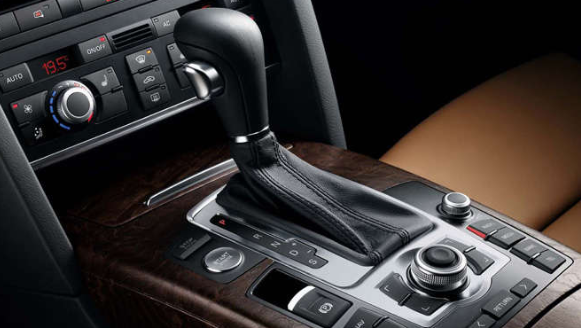
Tiptronic is a type of automatic transmission that also gives the driver the option to shift gears manually — without using a clutch pedal. In automatic mode, the car's computer (ECU) manages all gear changes as it normally would. In manual mode, the driver takes over, selecting gears up or down using either the gear lever or paddle shifters mounted behind the steering wheel.
The key distinction from a true manual gearbox is that no clutch is involved. Tiptronic uses a torque converter — just like a conventional automatic — but adds an electronic layer that allows the driver to override the automatic gear selection at will.
"Tiptronic transmission gives you the best of both worlds — the convenience of an automatic and the engagement of a manual, without the complexity of a clutch."
A Brief History: Where Did Tiptronic Come From?
The concept of a driver-selectable automatic transmission actually dates back further than most people realise. Packard and Chrysler were among the first automakers to experiment with semi-automatic gear-shifting mechanisms in the late 1930s, developing systems that could automatically engage and disengage the clutch during gear changes.
The modern Tiptronic as we know it was developed and trademarked by the Volkswagen-Audi Group (VAG). Today, the term "Tiptronic" is technically a VAG brand name — but it has become widely used in the automotive world to describe any automatic transmission with a manual-shift mode.
You will find this type of transmission across a range of vehicles, including:
-
Luxury brands: Porsche, Audi, BMW, Mercedes-Benz
-
Mainstream brands: Honda (iShift), Chrysler (AutoStick), Citroën (Sensodrive)
-
Japanese imports common in Kenya: Various Honda, Nissan, and Mazda models with paddle-shift or manual-mode options
How Does Tiptronic Transmission Work?
The system operates in two distinct modes, and switching between them is straightforward.
Automatic Mode
In this mode, the car's Electronic Control Unit (ECU) manages all gear shifting. The driver simply uses the accelerator and brake — exactly as with any standard automatic. The ECU monitors engine speed (RPM), vehicle speed, throttle position, and road conditions to select the optimal gear at any given moment.
This is the mode most Kenyan city drivers will use for the majority of their daily commute — smooth, effortless, and requiring no extra input.
Manual Mode
When the driver wants more control, they move the gear lever into the Tiptronic gate (usually marked with "+" and "−") or use the steering-wheel paddles. In this mode:
-
Pulling the "+" paddle or pushing forward on the lever upshifts to a higher gear
-
Pulling the "−" paddle or pushing back on the lever downshifts to a lower gear
-
The ECU still monitors RPM limits and will intervene if the driver's input risks engine damage
This ECU oversight is an important safety net. For example, if you attempt to downshift at a speed too high for a lower gear, the system will simply ignore the input. If the RPM climbs dangerously close to the redline and you have not shifted up, the ECU will shift automatically to protect the engine.
Many modern variants — often called Tiptronic S — also revert automatically to full automatic mode if the driver makes no manual input within approximately 8 seconds.
Tiptronic vs. Standard Automatic: Key Differences
Many drivers wonder how Tiptronic differs from a regular automatic. Here is a clear comparison:
Feature
Standard Automatic
Tiptronic
Gear shifting
ECU only
ECU or driver
Clutch required
No
No
Paddle shifters
No
Often yes
Driver engagement
Low
Medium to high
RPM protection
Yes
Yes
Best for
City commuting
City + sporty driving
The fundamental difference is driver agency. A standard automatic never lets you choose gears yourself. A Tiptronic gives you that option while retaining the automatic's safety net.
The Benefits of Tiptronic Transmission for Kenyan Drivers
1. Flexibility for All Driving Conditions
Kenya's roads demand variety. Nairobi's stop-start traffic suits automatic mode perfectly, while the long descents on roads like the Limuru escarpment or the Nairobi–Naivasha highway benefit greatly from engine braking via manual downshifts — saving your brake pads and improving control on steep gradients.
2. Improved Performance When You Need It
On open highways or during overtaking, manually holding a lower gear keeps the engine in its power band for more responsive acceleration. This is particularly noticeable in turbo-engined vehicles, where manual gear control can keep the turbo spooled for stronger throttle response.
3. Accessible for All Driver Levels
Unlike a manual gearbox, Tiptronic requires no clutch coordination. Beginner drivers can use it in automatic mode, while more experienced drivers can take advantage of the manual option without risk of stalling or mechanical damage.
4. Built-In Safety Safeguards
The ECU monitors RPM at all times. If you forget to shift or attempt an input that would damage the drivetrain, the system corrects itself automatically. This makes Tiptronic genuinely foolproof in a way that a standard manual gearbox never can be.
5. More Control on Descents
On long downhill sections — common on Kenyan routes like the Rift Valley descent or the road from Nairobi to the coast — selecting a lower gear manually delivers engine braking that reduces heat build-up in the brakes and gives the driver more confidence.
Common Tiptronic FAQs for Kenyan Drivers
Why won't my Tiptronic shift when I command it? The ECU is protecting the engine. If you try to downshift at too high a speed, or upshift too early, the system will ignore the input. This is a safety feature, not a fault.
Does using Tiptronic mode save fuel? Occasionally. Holding a higher gear at lower RPMs during highway cruising can improve economy. However, aggressive or frequent manual shifting often uses more fuel than letting the automatic mode operate efficiently.
Will driving in Tiptronic mode wear out the transmission faster? Not under normal use. Avoiding constant high-RPM operation and repeated hard downshifts keeps the transmission healthy. In some cases, manually preventing unnecessary gear hunting can actually reduce transmission wear.
Is Tiptronic the same as paddle shifters? Not exactly. Paddle shifters are one method of controlling a Tiptronic-style manual mode. Some vehicles achieve the same function via a traditional gear lever with a secondary gate, rather than steering column paddles.
Why does Tiptronic feel jerky at low speeds? This is usually caused by old or degraded transmission fluid, a dirty valve body, or the transmission control module struggling to adapt. A transmission fluid service typically resolves this.
Does Tiptronic work better with turbocharged engines? In many cases, yes. Manual gear control in a turbocharged car allows the driver to keep the engine within the turbo's effective power band, delivering sharper throttle response and stronger acceleration on demand.
Can Tiptronic skip gears? Some modern systems allow it. Depending on the software calibration, the transmission may jump from 6th directly to 3rd or 4th gear when rapid engine braking or acceleration is needed.
Which Cars in Kenya Have Tiptronic or Manual-Mode Transmissions?
While Tiptronic is technically a Volkswagen-Audi trademark, the manual-shift automatic concept is now found across a wide range of vehicles available in Kenya — including many popular Japanese imports. Models featuring paddle shifters or manual-mode selectors include:
-
Honda Fit / Jazz — iShift or paddle-shift variants
-
Mazda 6 and CX series — Sport mode with paddle-shift function
-
Nissan X-Trail and Murano — Manual-mode CVT with paddle shifts
-
Toyota RAV4 and Harrier — Sequential shift mode
-
Subaru Forester and Legacy — Lineartronic CVT with manual mode
-
Volkswagen Golf and Tiguan — DSG transmission with full Tiptronic function
-
Audi A4 and Q5 — Audi-specific Tiptronic S system
If you are shopping for a used car with a Tiptronic or paddle-shift system in Kenya, auto24.co.ke is a great starting point. The platform lists a wide range of verified used vehicles — including many of the Honda, Mazda, Nissan, and Subaru models above — and you can filter by type and specifications to find one that suits your driving preferences. Browsing auto24.co.ke/cars also helps you compare pricing across models before making a decision.
Is Tiptronic Transmission Right for You?
A Tiptronic system makes most sense for drivers who:
-
Want more control than a standard automatic provides, without the commitment of a manual
-
Do regular highway or long-distance driving where gear selection impacts performance and economy
-
Drive routes with steep descents where engine braking is valuable
-
Enjoy the driving experience but do not want to deal with a clutch in city traffic
It is less suited to drivers who simply want the most fuel-efficient automatic possible and will never use the manual mode — in that case, a well-calibrated standard automatic or CVT may serve you better.
For more in-depth guides on car technology, transmission types, and what to look for when buying a used vehicle in Kenya, the full editorial library at autoskenya.com is well worth exploring. For the latest automotive news and car comparisons tailored to the Kenyan market, automag.co.ke is another excellent resource to bookmark.
Final Thoughts
Tiptronic transmission bridges the gap between driving convenience and driving engagement — and for Kenyan roads, that balance is genuinely useful. Whether you are navigating Nairobi traffic on a Monday morning, descending the Rift Valley escarpment on a weekend trip, or overtaking on the Thika Superhighway, having the option to take manual control — without clutch complexity or engine-damage risk — is a meaningful advantage.
As more Japanese used imports arriving in Kenya come equipped with paddle shifters or manual-mode CVTs, understanding how Tiptronic technology works helps you make smarter buying decisions and get more out of whatever car you drive.
Have you driven a car with a Tiptronic or paddle-shift system in Kenya? Did you find the manual mode useful, or did you stick to automatic? Share your experience in the comments below — your insights could help a fellow Kenyan driver make a better choice.
Read more on autoskenya.com:
-
CVT vs Automatic vs Manual: Which Transmission Is Best for Kenya?
-
What to Check Before Buying a Used Automatic Car in Kenya
-
Best Automatic Cars Under KSh 1.5 Million in Kenya