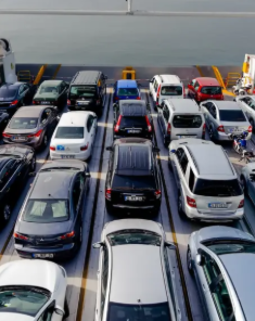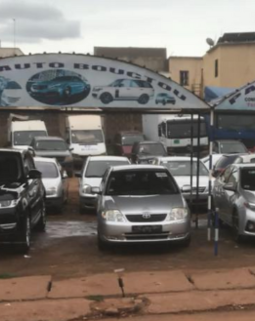


Japan has long been Kenya's favourite source of quality used vehicles. In fact, Japanese imports account for a staggering 94.3% of all used cars entering the Kenyan market — and for good reason. Japanese vehicles are well-maintained, low-mileage, right-hand drive, and available at prices that local dealerships simply cannot match.
But if you have never done it before, importing a car from Japan can feel overwhelming. Which car qualifies? How much tax will you pay? What documents do you need? How do you avoid losing your money to scammers?
This guide answers all of that — step by step.
Why Import a Car from Japan to Kenya?
Before we get into the how, it helps to understand why so many Kenyans go the Japan route.
Quality at the right price. Japan's strict vehicle inspection system — the Shaken — forces owners to keep cars in excellent mechanical condition. Once the three-year Shaken cycle approaches, many Japanese owners choose to sell rather than pay for another expensive inspection. That means Kenyan buyers get low-mileage, well-serviced vehicles at a fraction of their original cost.
Right-hand drive. Kenya drives on the left, so RHD vehicles are a legal requirement — and Japan is almost entirely an RHD market. No conversion headaches.
Spare parts availability. Toyota, Nissan, Subaru, Honda, and Mazda all have strong dealer and aftermarket parts networks across Nairobi, Mombasa, Nakuru, and Eldoret. Buying a Toyota Fielder or Subaru Forester from Japan means you will never struggle to find a replacement part.
Wide variety. Whether you want a compact city car like the Toyota Vitz, a workhorse like the Toyota Probox, a family SUV like the Toyota RAV4, or a luxury off-roader like the Land Cruiser Prado, the Japanese market has it all.
"Importing a car from Japan is one of the smartest ways to own a reliable, low-mileage vehicle at a competitive price. Japan's auction system is known for quality control and transparency."
For the latest automotive news and expert buying advice tailored to Kenyan drivers, check out AutosKenya.com — a go-to resource for car reviews, market trends, and driving tips.
Kenya's Import Rules: What You Must Know First
Before you spend a single shilling, you need to understand Kenya's vehicle import regulations. Importing a non-compliant vehicle is not just costly — it can result in your car being turned back at the port.
The 8-Year Age Rule
Kenya only allows the importation of vehicles that are less than 8 years old from the date of first registration. This is enforced under the Kenya Bureau of Standards Code of Practice (KS 1515:2000) and Legal Notice No. 78 of 2005.
In practical terms: in 2025, your vehicle must have been first registered in 2018 or later. In 2026, the cut-off moves to 2019, and so on.
Right-Hand Drive Only
All imported vehicles must be right-hand drive (RHD). Left-hand drive vehicles cannot be registered in Kenya unless they serve a specific purpose (such as ambulances). Japan is almost entirely an RHD market, so this requirement is rarely a problem when sourcing from there.
Mandatory Pre-Export Roadworthiness Inspection
Every vehicle imported into Kenya must undergo a Pre-export Verification of Conformity (PVoC) inspection before it leaves Japan. This inspection is carried out by a KEBS-approved inspection agent in Japan. The inspector checks:
- Roadworthiness and mechanical safety
- Brake system and tyre condition
- Lighting and emissions compliance
- Structural integrity
Once the car passes, you receive a Certificate of Roadworthiness (CoR) — without it, Kenyan customs will not release your vehicle.
No Left-Hand Drive Exceptions for Private Imports
Even for returning residents or diplomats, the same rules apply. The vehicle must be RHD and within the 8-year limit.
Step-by-Step: How to Import a Car from Japan to Kenya
Here is the full process broken down into manageable stages.
Step 1: Choose the Right Vehicle
Start by identifying exactly what you need — your budget, the terrain you drive on, fuel preferences, and the family or cargo load you typically carry.
Popular Japanese cars imported to Kenya include:
- Toyota Axio / Fielder — reliable sedans for city and upcountry driving
- Toyota Vitz / Passo — compact, fuel-efficient city cars
- Toyota Probox — the workhorse choice for business owners
- Toyota RAV4 / Harrier — family SUVs with great ground clearance
- Toyota Land Cruiser Prado — the off-road gold standard
- Subaru Forester / Impreza — popular among younger drivers for their AWD and sporty feel
- Nissan X-Trail — a versatile all-rounder
- Mazda Demio / CX-5 — stylish and fuel-efficient choices
- Honda Fit / Freed — compact yet practical
Japanese auction houses grade vehicles on a 1 to 6 scale, where 1 is the lowest and 6 is near-perfect. For Kenyan conditions, look for auction grades of 3.5 and above. Grade 4 and 4.5 vehicles offer the best value — they're well-maintained with minor cosmetic imperfections.
Pro Tip: If you want to skip the import hassle entirely and find already-imported, certified used Japanese cars in Kenya, browse the listings on Auto24.co.ke. The platform carries certified used vehicles — including popular models like the Toyota Fielder, Subaru Forester, and Nissan X-Trail — with proper documentation and nationwide availability.
Step 2: Find a Reputable Japanese Exporter
This step can make or break your import experience. Scams in this industry are rampant — in 2024 alone, JUMVEA (Japan Used Motor Vehicle Exporters Association) blacklisted over 200 fraudulent car export websites. The average victim lost between $3,500 and $8,500.
How to protect yourself:
- Use exporters who are JUMVEA-registered — you can verify membership on the official JUMVEA website
- Avoid any exporter who requests payment via untraceable methods (crypto, Western Union, etc.)
- Use escrow services where available
- Verify the exporter's physical address, company registration, and track record
- Ask for live photos and video of the vehicle, not just stock images
- Cross-reference their vehicle auction sheets (which include honest assessments of the car's condition)
Reputable exporters include platforms like BE FORWARD, SBT Japan, Car From Japan, AA Japan, and Next Drive Japan — all of which have established track records with Kenyan buyers.
For an in-depth look at avoiding scams and understanding costs, AutoMag.co.ke has an excellent resource on the topic.
Step 3: Agree on Price and Payment Terms
Once you have identified your vehicle, negotiate the final price. Japanese used car prices are typically quoted in FOB (Free on Board) terms — meaning the price covers the vehicle up to the point it is loaded onto the ship in Japan. You will then pay separately for:
- Shipping (freight)
- Marine insurance
- Pre-export inspection fees (typically $150–$250)
Together, these make up the CIF value (Cost + Insurance + Freight) — the figure that Kenyan customs uses to calculate your import taxes.
Always get a full quote that breaks down FOB price, freight cost, insurance, and inspection fee before making any payment.
Step 4: Pre-Export Inspection (PVoC)
Before your vehicle is shipped, the exporter arranges a PVoC inspection by a KEBS-approved agent in Japan. The main approved inspection body in Japan is QISJ (Quality Inspection Services Japan).
The inspector will check:
- Engine condition, brakes, tyres, and suspension
- All safety systems (lights, horn, seatbelts)
- Emissions compliance
- Odometer reading and overall structural condition
If the vehicle passes, you receive a Certificate of Roadworthiness (CoR) and the car proceeds to shipping. If it fails, the vehicle cannot be exported — so choose well from the start.
Step 5: Shipping to Mombasa Port
Once the inspection is cleared and payment confirmed, the vehicle is loaded onto a vessel bound for Mombasa Port — Kenya's main entry point for imported vehicles.
There are two main shipping methods:
Shipping Method Description Approximate Cost RoRo (Roll-on/Roll-off) Car is driven onto the ship and parked on the deck Cheaper, but less protection from elements Container Shipping Car is loaded into a sealed container More expensive, better protectionTransit time from a Japanese port (Osaka, Yokohama, or Nagoya) to Mombasa is typically 4 to 6 weeks, depending on the shipping line and route.
Step 6: Customs Clearance at Mombasa Port
When your car arrives at Mombasa, it is offloaded and taken to a Container Freight Station (CFS) — a storage yard where it awaits customs clearance. Storage fees (CFS charges) accumulate daily, so it is vital to begin the clearance process as early as possible.
To clear your vehicle, you will need a KRA-licensed Customs Clearing and Forwarding Agent. Your agent will:
- Submit an Import Declaration Form (IDF) through the KRA online system (ideally a few days before the car arrives)
- Present all required documents to customs
- Facilitate any KRA physical inspection of the vehicle
- Pay all applicable duties and taxes on your behalf
Documents required for customs clearance:
- Original Bill of Lading
- Commercial Invoice (from the seller)
- Pre-export Verification of Conformity (PVoC) certificate
- Certificate of Roadworthiness (CoR)
- Import Declaration Form (IDF)
- Your National ID / Passport
- Your KRA PIN certificate
Step 7: Pay Import Duties and Taxes
This is where many first-time importers get caught off guard. The taxes stack up significantly. Here is a breakdown of what you will pay:
Tax/Levy Rate Basis Import Duty 25% Customs Value (CIF) Excise Duty Varies (typically 20%+) Customs Value + Import Duty VAT 16% Customs Value + Import Duty + Excise Duty Import Declaration Fee (IDF) 3.5% (min. KSh 5,000) CIF Value Railway Development Levy (RDL) 2% CIF ValueNote: Since July 2025, KRA uses an updated CRSP (Current Retail Selling Price) schedule to determine customs value. The CRSP is KRA's benchmark for the retail price of each vehicle model when new. KRA compares the CRSP-derived value against your actual invoice value and uses whichever is higher. This change means accurate documentation is more important than ever.
Example estimate (illustrative): A 2020 Toyota Fielder with a CIF value of approximately KSh 1.2 million could attract total duties and taxes of between KSh 600,000 and KSh 900,000, depending on engine size and fuel type. Always use a professional clearing agent or KRA's duty calculator to get a precise figure before committing to a purchase.
Additional clearance costs at Mombasa Port:
- Port charges & SGR: ~KSh 120,000
- Verification fee: ~KSh 15,000
- Interpol check: ~KSh 15,000
- Radiation check: ~KSh 1,000
- Local transport (Mombasa to Nairobi): ~KSh 25,000
- Agent's fee: ~KSh 100,000
Step 8: NTSA Registration
With customs cleared and duties paid, the final step is registering your vehicle with the National Transport and Safety Authority (NTSA). You will need:
- Certificate of Customs Entry (from KRA)
- Certificate of Roadworthiness
- Original logbook / foreign registration documents
- Your National ID / Passport
- KRA PIN certificate
NTSA will issue a Kenyan logbook and registration plates, and your car is officially road-legal.
Total Cost to Import a Car from Japan to Kenya
Let us put it all together. Here is a realistic cost framework:
Cost Element Estimated Amount Vehicle purchase price (FOB) KSh 800,000 – 2,500,000+ Shipping & freight KSh 80,000 – 150,000 Marine insurance KSh 15,000 – 30,000 Pre-export inspection (PVoC) ~KSh 25,000 Import duties & taxes (all) KSh 600,000 – 1,500,000+ Port clearance & agent fees ~KSh 280,000 NTSA registration KSh 5,000 – 15,000Total timeline: From placing your order to driving your car in Nairobi, expect the process to take 8 to 13 weeks in total.
How to Avoid Common Import Scams
Fraud in the Japan-to-Kenya car import space is a real and growing problem. Here is how to protect yourself:
Verify the exporter first. Check JUMVEA's official registry. Any legitimate exporter will be happy to share their registration details.
Never pay via untraceable methods. Wire transfers to verified bank accounts are standard. Be very wary of exporters who ask for cryptocurrency, Western Union, or money gram payments.
Demand authentic documentation. Scammers increasingly create fake inspection certificates and forged auction sheets. Request independent verification through KEBS and JUMVEA.
Use escrow where available. Some reputable platforms offer escrow services that hold your payment until the vehicle is confirmed on board the ship.
Work with a local clearing agent from day one. A KRA-licensed agent in Kenya can help verify exporter credentials and flag any documentation inconsistencies before you lose your money.
Best Japanese Cars to Import to Kenya Right Now
Not sure which model to target? Here are some of the most popular and best-value Japanese cars currently sought by Kenyan buyers:
Best City Cars
- Toyota Vitz / Yaris — extremely fuel-efficient, easy to park, affordable
- Toyota Passo / Daihatsu Boon — great for first-time drivers
- Honda Fit — versatile interior, reliable engine
Best Family Cars
- Toyota Fielder / Axio — the quintessential Kenyan family saloon
- Toyota Noah / Voxy — spacious 7-seater van, loved by families
- Nissan Note / Tiida — comfortable, fuel-efficient
Best SUVs
- Toyota RAV4 — the benchmark family SUV for Kenyan roads
- Subaru Forester — AWD capability, loved by weekend adventurers
- Toyota Land Cruiser Prado — the king of upcountry roads
Best Workhorses
- Toyota Probox — the go-to commercial vehicle for small businesses
- Nissan X-Trail — rugged, practical, easy to maintain
If you want to compare certified, already-imported versions of these models without going through the entire import process yourself, Auto24.co.ke lists a wide range of quality used Japanese vehicles with verified documentation — ideal if you want to buy with confidence today.
Frequently Asked Questions
Can I import a hybrid or electric car from Japan? Yes. Hybrid vehicles like the Toyota Prius and Aqua are among the most popular imports. Electric vehicles attract preferential duty rates — import duty at 25% and excise duty at just 10% (compared to higher rates for petrol vehicles).
What is the cheapest way to import a car from Japan? RoRo shipping is cheaper than container shipping. Choosing a vehicle grade 3.5 to 4 (rather than 4.5 or 5) also reduces your purchase cost while still getting you a well-maintained car.
Do I need to be physically present in Japan to buy the car? No. Most transactions are handled entirely remotely through licensed exporters who bid on your behalf at Japanese auctions. You review photos and auction sheets online and confirm purchases electronically.
Is it cheaper to import or buy locally in Kenya? For high-end models like SUVs and pickups priced above KSh 2.5 million, importing is usually cheaper. For lower-value vehicles under KSh 2 million, buying locally may work out more cost-effective once you factor in all import taxes and clearance costs.
How long does shipping take? Shipping from Japan to Mombasa typically takes 4 to 6 weeks. Adding purchase, inspection, and registration time, the full process runs 8 to 13 weeks.
Final Thoughts
Importing a car from Japan to Kenya is one of the best ways to get a reliable, low-mileage vehicle at a competitive price — as long as you do your homework. The key steps are straightforward: choose a compliant vehicle, find a verified exporter, arrange inspection and shipping, clear customs with a licensed agent, pay your taxes, and register with NTSA.
The process takes patience, but the payoff — a quality Japanese vehicle at a fraction of the local dealership price — is well worth it.
For more expert automotive guides, car reviews, and Kenya road tips, visit AutosKenya.com. And for even more in-depth automotive journalism, be sure to check out AutoMag.co.ke — Kenya's trusted automotive news source.
If you'd rather skip the wait and buy a certified used Japanese car that is already in Kenya today, head over to Auto24.co.ke and browse their current inventory of vetted, ready-to-drive vehicles.
Have you imported a car from Japan to Kenya before? Share your experience in the comments — your tips could help a fellow Kenyan make a smarter decision!
📌 Read next: Best Affordable Cars for First-Time Buyers in Kenya (2026)