
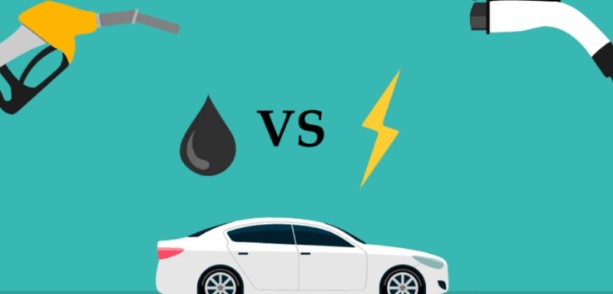
Kenya is on the cusp of a major automotive shift. With rising, unpredictable fuel prices and government incentives pushing for greener transport, many Kenyan drivers are asking a crucial question: Is owning an electric vehicle (EV) cheaper than a petrol or diesel car?
The answer involves more than just comparing the price at the pump versus the price of a unit of electricity. It requires a detailed look at the total running costs—a comparison we've broken down using current Kenyan market data for you to determine your long-term savings.
1. The Cost of Petrol and Diesel in Kenya
Fuel prices in Kenya are volatile, heavily influenced by global crude oil prices, exchange rates, and government taxes like VAT (16%) and Excise Duty.
1.1. Fuel Consumption Benchmark
To calculate running costs, we use the average consumption of a popular, fuel-efficient used car in Kenya, like a Toyota Vitz or a similar compact saloon/hatchback, which typically achieves around 12 km per litre.
Using the latest EPRA price cap (as of December 2025):
-
Super Petrol: Approximately KES 184.52 per litre.
Cost per Kilometre (Petrol):
$$\text{Cost/km} = \frac{\text{Price per Litre}}{\text{Distance per Litre}} = \frac{\text{KES } 184.52}{12 \text{ km}} \approx \text{KES } 15.38$$
1.2. The Volatility Factor
The primary challenge for owners of Internal Combustion Engine (ICE) vehicles is the lack of budget predictability. Fuel prices can be adjusted monthly by EPRA, leading to sudden, significant jumps in operating expenses.
-
“For a driver covering 1,500 km per month, the monthly fuel bill is already over KES 23,000, and that figure is highly vulnerable to global oil politics.”
2. The Cost of Electricity for EV Charging
The running cost of an EV depends entirely on the price of electricity per unit (kWh) and where you charge your vehicle (home vs. public station).
2.1. Electricity Tariffs in Kenya
Kenya Power has different residential tariff bands, but the average cost for most domestic consumers (Domestic 2 & 3 tariffs), factoring in various levies and taxes, ranges from approximately KES 16 to KES 20 per kWh. Crucially, EPRA and Kenya Power have introduced a special e-mobility tariff to encourage EV adoption.
-
Public Charging (Off-Peak/Home Charging Target): Approximately KES 8 to KES 16 per kWh under the new special e-mobility tariff.
2.2. EV Consumption Benchmark
Most modern compact EVs consume between 15 and 20 kWh per 100 kilometres driven. We will use an average of $17.5 \ kWh / 100 km 0.175 kWh} / km.
Assuming an off-peak charging cost of KES 10 per kWh (a conservative middle ground between tariffs and public station pricing):
Cost per Kilometre (Electric):
Cost/km = Consumption/km times Price/kWh
Cost/km = 0.175 kWh/kmtimes KES 10 kWh approx KES 1.75
2.3. The Cost Advantage Calculation
Comparing the KES 15.38/km for petrol versus the KES 1.75/km for electric charging reveals a massive saving:
$$\text{Savings per km} = KES 15.38 - KES 1.75 = KES 13.63
This represents a potential 88% saving on running costs per kilometre.
-
For the same driver covering 1,500 km per month:
-
EV Monthly Cost: 1,500 km times KES 1.75 km = KES 2,625
-
Monthly Savings: KES 23,070 - KES 2,625 = KES 20,445
-
This significant monthly saving is the most compelling argument for electric cars in Kenya.
3. Total Cost of Ownership: Beyond the Pump
While charging is dramatically cheaper, the initial purchase price and maintenance must be factored into the Total Cost of Ownership (TCO).
3.1. Initial Purchase Price
Currently, the initial price of EVs in Kenya is generally higher than comparable second-hand ICE vehicles.8
-
Used ICE Vehicles: Easily available for under KES 1.5 million. You can find popular models like the Toyota Vitz and Mazda Demio and compare their prices on auto24.co.ke.
-
EVs: Prices start from around KES 2 million to KES 3.5 million for entry-level models.
3.2. Maintenance and Service Costs
This is the hidden advantage of the EV. With fewer than 20 moving parts in the drivetrain compared to hundreds in an ICE engine, EVs eliminate the need for:
-
Oil changes
-
Spark plug replacements
-
Gearbox fluid changes
-
Clutch replacements
EV maintenance primarily involves tyre rotation, brake checks (since regenerative braking reduces wear), and cabin filter replacements.This results in savings of 60% or more on routine maintenance compared to a petrol car.
3.3. Infrastructure and Range Anxiety
While the cost per kilometre is low, accessibility is still a factor. The charging infrastructure is expanding rapidly, with Kenya Power and private entities establishing new stations in Nairobi, Mombasa, Kisumu, and along major highways. However, the network is not yet as dense as petrol stations.
-
The government has a plan to install up to 10,000 public charging points by 2030, a clear indicator of the future direction.For more details on the expansion, check out reports from sites like automag.co.ke.
Conclusion: The Financial Verdict
For Kenyan drivers, electric vehicles present a clear, overwhelming advantage in terms of running costs and long-term maintenance savings.While the initial purchase price remains the biggest hurdle, the massive savings on fuel (up to 88% per kilometre) and minimal service costs mean the break-even point (where the cheaper running cost offsets the higher purchase price) occurs relatively quickly—often within the third or fourth year of ownership, depending on mileage.
If you drive high mileage (e.g., for business or long commutes), the switch to electric mobility offers immediate and substantial financial relief from the burden of volatile fuel prices.
Discover additional tips on securing the best insurance rates for your new EV and maximizing your battery life in our other articles on autoskenya.com.
What's Your Next Move?
Do the savings convince you to consider an electric vehicle, or are you waiting for lower prices? Share your thoughts and questions about EVs in the comments below!