



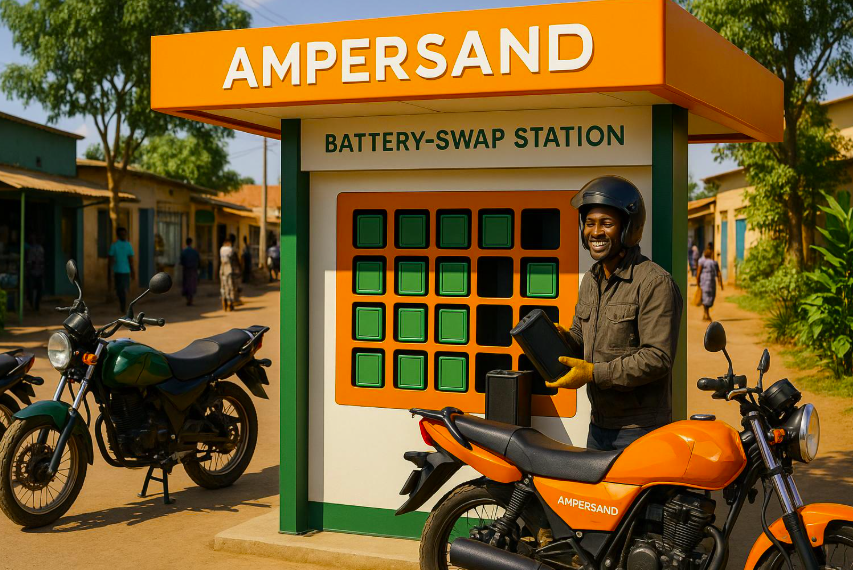
Explore how Ampersand’s fast battery swap network boosts earnings, cuts emissions, and scales sustainable moto transport in Kenya & Rwanda.
Ampersand’s E‑Moto Revolution in Kenya & Rwanda
Kenyan readers, here’s a story that matters: Ampersand is transforming boda boda transport with its electric motorcycle (e‑moto) and battery swap network. Aimed at riders and eco-conscious urbanites alike, Ampersand’s model combines profitability, infrastructure innovation, and sustainability across Rwanda and Kenya.
Ampersand at a Glance
-
Founded in 2016, Ampersand is Africa’s first electric transport energy company using smart battery swap tech (AMPERSAND).
-
As of mid‑2025, its e‑moto fleet surpasses 5,800 bikes, travelling nearly 950,000 km daily (AMPERSAND).
-
The network conducts 18,000+ battery swaps each day, with each swap taking under two minutes (EV24).
Why Kenya & Rwanda Are Ideal Markets
Strong government support and renewable-friendly policies have created fertile ground for Ampersand’s growth. Rwanda continues incentives such as tax exemptions for EVs, while Kenya benefits from nearly 100% renewable electricity generation (Rest of World).
How Their Battery‑Swap System Works
-
User-friendly app: Riders use the Ampersand Driver App to monitor battery levels and locate nearby swap stations (EV24).
-
Lightning-fast swaps: Technicians complete battery replacements in under two minutes; the full process under five minutes, costing about $1.60 per swap (EV24).
-
Solar-powered stations: Nairobi pilots integrate 37 kWp solar PV systems, cutting reliance on unreliable grids and reducing carbon footprints (EV24).
Impact on Riders & Earnings
-
45% higher earnings: Savings on fuel and maintenance translate into significantly higher take-home pay—drivers typically save about $700 per year (EV24).
-
A driver in Kigali, who previously earned about $1.60 daily, now nets up to $23/day thanks to e‑moto efficiency (How we made it in Africa).
-
Each rider supports on average 3.8 people in Kenya and 4.6 in Rwanda (AMPERSAND).
Jobs, Manufacturing & Local Impact
-
Ampersand now employs 500+ staff across Rwanda and Kenya and produces roughly 100 motorcycles and 140 batteries per week (AMPERSAND).
-
Their Nairobi factory—spanning 21,000 m²—can assemble up to 60 e‑motos a day, scaling local capacity significantly (AMPERSAND).
-
The entire business creates green jobs across manufacturing, station ops, software and tech roles.
Environmental Benefits
-
Over 12,000 tonnes of CO₂ emissions avoided so far, with each e‑moto saving about 2 tonnes annually (EV24).
-
E‑motos emit 98% less CO₂ when solar-powered, and about 75% less even on grid‑electricity, compared to petrol bikes (FootPrint Coalition).
-
Cleaner air and less noise in Kenya’s cities add public health benefits.
Growth & Future Plans
-
Ampersand aims to support 1 million vehicles with battery swaps and deploy up to 600,000 e‑motos by 2030 (EV24).
-
They've partnered with BYD to roll out 40,000 e‑motos in Kenya and Rwanda by end-2026 (TechCabal).
-
Their Kenyan factory expansion enables meeting rising demand from Nairobi’s large boda boda operator base (AMPERSAND).
How Ampersand Compares: Battery‑Swap vs. Traditional Charging
Battery Swap Standard Charging Less than 2 min swap Takes 2–6 hours for full charge Swap stations ready near urban routes Requires pausing operations Pay-per-use, no upfront battery cost Upfront battery ownership or charging station Battery lifespan ~350,000 km Risk of degradation with fast charging Supports continuous earnings Idle time reduces incomeBattery swapping supports about 2 swaps per day in Nairobi (150 km/day) and 3.7 in Kigali (200 km/day) (MAfrica Business Communities, infrahub.africa, CleanTechnica).
Relevance to Kenyan Audience & How AutosKenya Readers Benefit
Kenyan riders, boda boda operators, environmental advocates, and policymakers—all stand to gain:
-
Electric transport that costs the same to buy but half to operate
-
Cleaner urban air and lower noise
-
Green job creation and income boosts
-
Seamless energy solutions integrated into Kenya’s renewable grid
Check out related articles on AutosKenya.com about EV trends and local testing.
Curious about financing or trade-ins? For verified e‑motos listed in Kenya, browse options on Auto24.co.ke—a trusted platform for affordable, second-hand and used EVs.
Conclusion
Ampersand is quietly but steadily planting the seeds of Kenya’s electric motorcycle future. With fast battery swapping, significant rider earnings, local manufacturing, and emissions reduction, it delivers an approach that’s profitable for operators and planet. As Kenya's EV ecosystem grows—with support from platforms like Auto24 and policy momentum—the country is on the brink of a clean, efficient shift in motorcycle transport.
FAQs
1. What’s the cost benefit of Ampersand’s swap system for riders?
Riders save up to 45% per year compared to petrol bikes, with shorter downtime and lower maintenance.
2. How fast is a battery swap?
Typically under 2 minutes for the physical swap; full process including payment takes under five minutes.
3. Where does Ampersand power its stations?
Many Nairobi pilot stations use 37 kWp solar systems, reducing grid dependency and emissions.
4. Can I finance an Ampersand e‑moto in Kenya?
Yes—Ampersand partners with local financiers like M‑Kopa, Bboxx, Watu, and Jali for 24‑month financing plans (AMPERSAND, TechArena, EV24, Rest of World).
5. How can I find electric motorcycles in Kenya?
Visit Auto24.co.ke—they list verified e‑motos for sale, useful for riders and fleet operators.


